
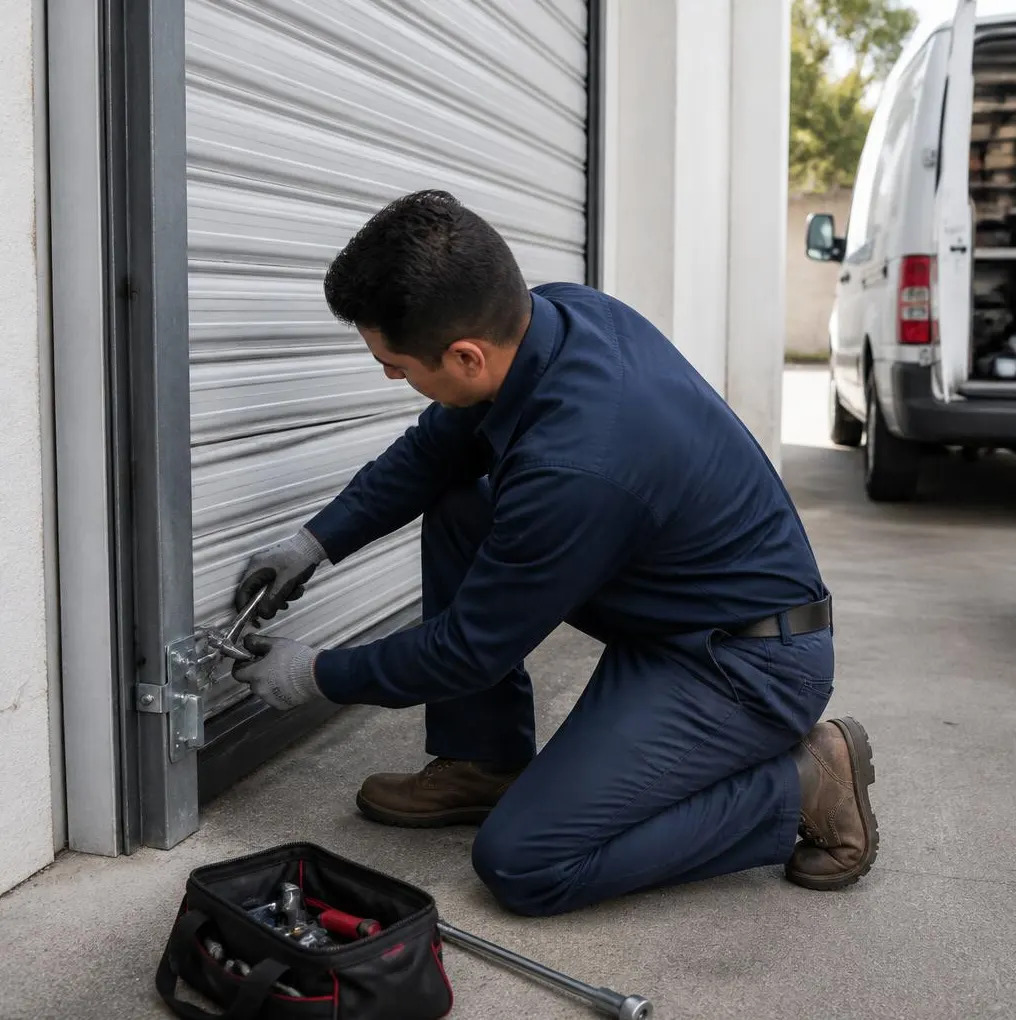
Rule of thumb: insulated steel is the right call for most homes in this part of Oklahoma. The exceptions are homeowners who want a true wood look and are willing to maintain it, or who have a very light-duty opener and need something lighter than steel.
That one-liner covers most driveways, but it's worth seeing why, because each material behaves differently once summer heat, hailstorms, dust, and the occasional ice event start working on it year after year.
Steel
Steel is the default choice for a reason. It's available in a range of gauges and insulation levels, it takes paint well, and manufacturers build it with wind-load ratings that matter here given how quickly a calm afternoon can turn into a severe storm with gusty outflow winds.
- Strengths: Strong for the price, widely available in insulated (two-layer or three-layer) and non-insulated versions, holds up to wind pressure when properly reinforced, low maintenance.
- Weaknesses: Thinner gauges (25-27 gauge) can dent in hail; a scratch that exposes bare metal can rust if it sits unaddressed through humid stretches.
- Climate fit: A heavier 24-gauge insulated steel door shrugs off hail far better than the thinner budget option, and the insulation helps the attached garage stay more tolerable through a long hot summer.
Wood
Wood is the material people fall in love with for curb appeal, and it genuinely looks better than anything else on this list. The cost is ongoing attention.
- Strengths: Unmatched custom look, can be stained or painted any way you like, repairable in sections.
- Weaknesses: Repainting or restaining every year or two is realistic here, not occasional, because intense summer sun dries and cracks finishes faster than milder climates. Panels can warp or swell as the door swings between hot, dry stretches and sudden wet weather. Wood is also heavy, which puts more strain on an opener and on hinges over time.
- Climate fit: Workable if you're committed to upkeep; a poor fit if you want to install it and forget it.
Aluminum
Aluminum shows up most often in high-end doors with large glass panels, and it has one clear advantage: it's light.
- Strengths: Won't rust, lighter weight reduces strain on openers and torsion springs, good for oversized or glass-heavy designs.
- Weaknesses: It's a soft metal, so it dents more easily than steel, and that's a real liability in an area that gets sudden hail. Once dented, aluminum doesn't pop back out the way steel sometimes does.
- Climate fit: Fine for a sheltered garage or a design-forward door with glass; not the best pick as a primary door facing open sky and storm tracks.
Fiberglass
Fiberglass is built to mimic the look of wood over a steel or aluminum frame, and it resists some of the problems both of those materials have on their own.
- Strengths: Won't rot, rust, or warp the way wood and bare steel can, holds up reasonably well to minor dings, and can be molded to look like wood grain without the maintenance schedule.
- Weaknesses: Can crack on hard impact, especially a thinner panel taking a direct hit from large hail. Colors and finishes can fade faster under sustained, intense summer UV exposure than you'd expect.
- Climate fit: A reasonable middle ground, though not the toughest option against hail compared to a heavier steel door.
Composite (Wood-Composite)
Composite doors pair a steel skeleton with a wood-fiber composite overlay, aiming to give you the wood look with less of the wood problem.
- Strengths: Resists moisture swelling and warping better than solid wood, doesn't need refinishing nearly as often, holds paint and stain longer in direct sun than real wood does.
- Weaknesses: Costs more than plain steel, and while it's tougher than fiberglass against minor impacts, it's still not as dent-resistant as a heavier-gauge steel panel.
- Climate fit: A solid upgrade for anyone who wants the wood aesthetic without committing to a repainting routine every year or two.
The Trade-Offs, Side by Side
- Best hail resistance: Heavier-gauge insulated steel, followed by composite.
- Lowest long-term maintenance: Steel and composite, in that order.
- Best looks without compromise: Wood, if you're willing to maintain it; composite as a lower-maintenance alternative.
- Lightest on hardware and openers: Aluminum, though at the cost of dent resistance.
- Best overall value for a typical home here: Insulated steel.
What We'd Recommend for a Typical Yukon-Area Home
For most garages in Yukon, Mustang, El Reno, Piedmont, Bethany, Warr Acres, Tuttle, and the surrounding OKC area, a 24-gauge insulated steel door is the practical choice. It stands up to hail better than aluminum or thin-gauge steel, it doesn't demand the upkeep that real wood does through a long hot summer, and the insulation takes some edge off the heat transferring into an attached garage. If curb appeal is the priority and you don't want a repainting schedule, a composite door is the next step up, giving you a wood look with meaningfully less maintenance than the real thing.
When to Call Yukon Garage Door Specialists
If hail has already left dents, a door won't seal properly against wind-driven dust, or you're planning a replacement and want a straight answer on which material and gauge actually makes sense for your home, that's where we come in. Our Garage Door Installation service includes walking you through real options and realistic lifespans for this climate, not just the cheapest door on the lot. If you're not ready to replace anything yet but want your current door performing the way it should before next summer's storms, our Garage Door Maintenance service checks hardware, seals, and balance so small problems don't turn into a failed panel during a hailstorm.
Call Yukon Garage Door Specialists today to talk through the right door material for your home in Yukon, OK.